Creating High-Performing Teams

Creating High-Performing Teams

As leaders, we want to lead high performing teams and as team members, we want to be working as part of them. Working in a great team is an absolute pleasure and has an enormous impact on how we feel about our work and the company we are employed by. Of course, the opposite is also true and working in a dysfunctional team is deeply negative and has a huge impact on performance and can be enough to encourage individuals to leave and pursue other options.  

So how do we establish a great team, how do we lead one and how do we play our part in contributing to the success of the team?  

Let’s start by exploring some examples of great teams and a good place to start is in the sporting world. Anybody who is loyal to a particular team or club will know all too well the highs and lows associated with team performance. When a team is failing quite often the manger gets put under enormous pressure and the result is often a swift departure. 

If we take the Six Nations championship as an example, each team that takes part has been analysed by professionals, the media and all of us at home watching. Each team has its own characteristics with Wales being admired for their grit and determination whilst England heavily criticised for a lack of discipline. Back in 2003 when the England rugby team won the world cup the team was led by Sir Clive Woodward who helpfully shares his winning strategy. Woodward says that “great teams are made up of great individuals” and he focuses on creating a winning culture and claims a formula for creating “champion individuals”. Woodward lists 4 key criteria to create a winning team:- 

Talent – individual talent 

Teachability – “It’s often the most experienced person who is unteachable” 

Pressure – the warrior spirit 

Will – commitment to win.  

In his 2003 team Woodward describes having 5 champions and 10 warriors and he highlights the importance of coaching on two levels, for individuals and for the team together.   

Woodward’s approach was clearly successful, and he continues to support sporting organisations but also offers coaching and consultancy to business executives.  

Another team strategy brought to our attention is the “aggregation of marginal or incremental gains”. The strategy works on the premise that if we can improve every aspect of a team’s performance by 1% the overall result will be a significant improvement. This approach was highly publicised following the success of the British cycling team in 2008 and 2012 and whilst the achievements of the British cycling team are being questioned, the strategy is still very popular in the business environment.  

One of our favourite sporting strategies that has been embraced by business is described in the book “Does it make the boat go faster” as described by Ben Hunt-Davis in which he documents how his team adopted this strategy and subsequently won the gold medal at the 2000 Olympics in Sydney. I like this as it is simple and can be used to immediately ensure everyone on the team is on the same page. In business we might use this strategy to achieve a project within tight timescales or to focus on a particular aspect of our service for example, “does it make the patient experience better?” or “does it make the treatment safer”. It’s a great way to ensure focus and gain momentum to achieve short and medium-term goals.  

These examples of sporting successes in team performance provide plenty of interesting learning opportunities that can be adapted for business, and we may pick up ideas from numerous sources as we create our own leadership and team management strategies. Each of us can use best practice to influence our leadership style but ultimately our approach will be unique to us and our personalities. As we build our own style it is important to break down the aspects of teamwork and ensure we consider each aspect to build a good all-encompassing approach.  

Reflecting back to the wise words of Sir Clive Woodward we can consider the 4 elements of team success that he bases his approach on. 

Talent 

To create the greatest team, we want to have the greatest leader and the most talented individuals, and this might be realistic for a premiership football club but most of us are restrained by factors such as money, availability of talent, geography etc. In the real world what we really need to aim for is the most talented individuals available to us and ensuing that each individual deliver to the best of their ability.   

A team also requires a group of people with differing but complimentary talents. All of these individuals must find a way to work together to the benefit of the business and customer As well as having differing skills, a team will also be home to lots of different personality types and character types. Some people are eternal optimists, always anticipating the best possible outcome and seem oblivious to any potential barriers. Others will be the complete opposite preferring to plan for the worst-case scenario so that all bases are covered and prepared for. When two people of opposite types such as these come together, they can either create a perfectly balanced partnership or they can find it impossible to work together and hit a brick wall. Another potential conflict can arise when one person is an ideas person, and another is a detailed planner. The detailed plan that is essential to one person can be viewed as a barrier to progress and a time-wasting activity to the person who has the great idea and wants to get on with delivering it. Again, a balance of these two styles is ideal but how do we bring different personalities such as these together to work collaboratively.  

In last month’s article we talked about leaders needing to develop self-awareness and understanding their natural style. We suggested using psychometric profiling tools such as Myers Briggs and C-me profiling and again these tools are equally relevant to individuals working together as a team.  

Once an individual understands their own style and also the natural style of others on their team, they can learn the right way to communicate and work with one another to achieve success.  

The “ideas person” learns that by listening to the detailed oriented individual, their idea has a far greater chance of success as a result of the detailed plan that will be developed ensuring that every outcome is prepared for.  

Teachability  

An ability and willingness to learn is an important attribute for all team members. Too often we associate this with more junior team members but actually it is relevant to even the most senior members of a team and Woodward is quite right when he states, “It’s often the most experienced person who is unteachable”. To work well as a team, every individual needs to be prepared to adapt their ways of working for the good of the team. The well-known management phrase “It’s my way or the highway” might feel powerful but what if there is a better way? 

Pressure  

When Woodward says pressure, what he really means is the ability to perform under pressure and he believes the only way to ensure an individual and therefore the team is able to succeed under pressure is to practice by exposing the team to pressure regularly. He uses role play requiring the team to work through every eventuality to ensure they know exactly what to do in each situation.  

We would also argue that all teams must think about how to recover from being under pressure and build resilience. It is clearly not possible for any individual or team to perform under constant pressure and we need to build in mechanisms for recognising long periods of extreme pressure and have plans in place to relieve the pressure and allow recovery to take place. This may involve adjusting holiday allowance, time off in lieu or activities within the working day to allow for recuperation but they must be built in.  

Will  

A team needs to be driven by an agreed goal or objective and to share a joint motivation to succeed and achieve the goal. This is why the strategy of “Does it make the boat go faster” is so effective as it aligns the whole team to one clear, simple goal. A team that has one or more members who doubt the goal is achievable will have a draining impact on the team’s morale and will reduce each person’s motivation to succeed.  

It is said that “Teamwork makes the dream work” and we all agree wholeheartedly, but achieving the dream requires an investment of effort on a consistent basis. The most talented individuals might be individually amazing but unless they can work together as a team their talents can be wasted. The coming together of individuals with differing skill sets and personalities, working together effectively create an approach that brings balance that one individual could not achieve working alone is the ultimate goal. And most importantly, humans are tribal and evolved working together in teams, intrinsically knowing it makes us more effective and ultimately life more enjoyable.  

Defining your Target Audience for Social Media

Defining your Target Audience for Social Media

Developing a clear understanding of your social media target audience is one of the most important things to do before starting with your marketing strategy. Your target audience informs all elements of your social media strategy going forward. 

Before we get into the details, here’s a little tip: your target audience is not everyone! But there is plenty you can do to start defining and understanding your audience and we can also help with the rest. 

Audience research will help you craft relevant content, messaging, and ads, which can lead to higher conversion rates. 

But defining a target audience can be one of the most challenging aspects of marketing. But once you have a clear idea of who they are, your marketing will be more relevant and have better returns. 

Here’s how you can start to define a target audience and reach them through social media. 

First, let’s start by understanding what a target audience actually is. It’s a group of people you want to reach with your social channels who are most likely to be interested in your product or offer. They’ll share common traits or characteristics, like demographics and behaviours. 

We’ve got three things you can do to start to find your target audience 

Compile and look at your data on your existing customers and social media audience 

You’ve got so much information already at your fingertips. If you have social channels already, there are lots of really interesting stats and facts in the analytics sections of your social media accounts. You’ll have data on who’s following you, interacting with your posts, and some demographic data. 

But don’t forget the data you have of your existing customers, who regularly buy your products or services. They might not be online, but there is plenty of offline data there.  

Look at your competition 

Odds are, your social media audience overlaps with that of your competitors. So it’s worth checking out what they’re doing so you can benefit from the lessons they’ve already learned. Are they reaching segments you hadn’t thought to consider? How are they positioning themselves? 

What is your unique point of view? 

You’ll need to make sure you have a solid understanding of how your product or service makes your audience’s life: 

  • better 
  • easier 
  • more interesting

Does it solve their challenges? Address specific pain points? Help them meet their goals? All these questions will help you understand how your product or service helps your customers and you can start to use this as part of your marketing.  

If you want to know more about how our team can help you define your audience and develop a robust marketing strategy, just pop a message to Hannah, our client relationship manager who would be more than happy to talk you through some of our flexible marketing and social media packages. 

Hashtag Marketing – What’s the Point?

Hashtag Marketing – What’s the Point?

We’ve probably all at one point or another used hashtags. Whether that is on our own social profiles #SorryNotSorry or to sit alongside our brands social content. But do you really know how they work and the value of them to your marketing activity? And how do hashtags work on different platforms, does a LinkedIn hashtag work in the same way as an Instagram hashtag for example?

Let’s look at what they are, why they are important and how they work to add real value to the effort you have put into your content marketing strategy. Hashtags are the way to connect people with content. Grouping together the same topics, events or conversations. You should care about hashtags because it means you can take part in conversations happening all over the internet, allowing your posts greater organic (non-paid) social reach. Greater reach can equal greater engagement, boosting your brands profile, resulting in more business. Hashtags have proved to be vital for charities and social issues, raising awareness of key issues and making us all aware of where and how we can help. I think we can all agree that social media has made our world smaller and more connected, opening our eyes to things outside our own day to day lives.

So hashtags. very important for marketing. How do you use them? As you can imagine there will be do’s, don’ts and general hashtag etiquette that would be worth knowing.

Do:

  • Make it easy to remember — and spell. Don’t leave room for possible typos, which will make your posts undiscoverable
  • Be realistic. Don’t expect people to start using your brand slogan or other one-sided hashtags in their posts if it doesn’t fit naturally and there is no incentive for them to do so.
  • Do your research. Check and see what hashtags people are already using when talking about your brand and capitalise on those. Also, make sure to check if your desired hashtag is already being used. If so, ask yourself if it’s still relevant to your brand.
  • Give people a reason to use your hashtag. Whether it’s an actual prize or just recognition in the form of your hashtag your audience will respond better when it’s a mutually beneficial relationship.
  • Partner with influencers. Influencers can help gain exposure and visibility for your hashtag.

Don’t:

  • Expect your brand slogan to translate to a hashtag. A hashtag is meant to be inclusive, shareable, and discoverable. If it doesn’t organically fit within a post it’ll feel forced and lose its intended purpose.
  • Expect people to use your hashtag without a reason or incentive. The best hashtags can draw people in and invoke curiosity to explore and join in on the conversation.
  • Use all CAPS LOCK. Unless it’s an acronym, this feels like shouting and also adds unnecessary work.

Of course, the use of hashtags will vary per platform. On Instagram you can allow for up to 30 hashtags, many people leave these at the bottom of their post copy or even in the first comment which will attract people to your post and it definitely helps with aesthetics.

One of our favourite platforms for managing content and hashtags is Later and we found this all-encompassing guide to hashtags on IG which we highly recommend for further reading: https://later.com/blog/ultimate-guide-to-using-instagram-hashtags/

Twitter is generally a straight to the point platform, too many hashtags can look messy and like you are unsure on how to use the platform, so choose a branded hashtag and perhaps a related hashtag, or something else you’ve chosen strategically to get the most out of your organic content.

You can see what’s trending in your local area or country via Twitter trends, this might help you choose a hashtag to piggyback on but do be sensitive and socially aware when joining conversations onto hashtags that are representing sensitive topics, it won’t do your brand any favours. Find out more: https://help.twitter.com/en/using-twitter/twitter-trending-faqs

LinkedIn works similarly to Twitter, however, you can set up your own dashboard to monitor and manage the hashtags that you follow. When you create your post, you will also see some # suggestions underneath your copy, these are often very relevant to your content, so it is worth including these.

Another way to find real hashtags that people use is via groups, what are people using in the industry groups you follow? For example, #Freelancers or #DigitalMarketing, it is worth doing a bit of research on your own to come up with your very own hashtag strategy, but we will come onto that in more detail shortly. For more information on LinkedIn best practices, they have a handy guide on their website: https://help.linkedin.com/cc/custom_fattach/get/9635581/0/filename/LinkedIn%20Hashtag%20Best%20Practices%20Guide.pdf

Then last but not least Facebook. Do you remember at the beginning of this post I used #SorryNotSorry…well for some time the use of hashtags on FB were really to ‘state the unstated’ For example a person or brand might boast about something fun happening in the office on a Friday afternoon #LoveMyJob #TeamsThatPlayTogetherStayTogether I think you get the point, but now hashtags have seemingly made a comeback on Facebook. The platform shares stats on how many people are using certain hashtags and you can also connect any hashtags that you use on other platforms that are connected with your Facebook page: https://www.facebook.com/formedia/blog/using-hashtags-on-facebook

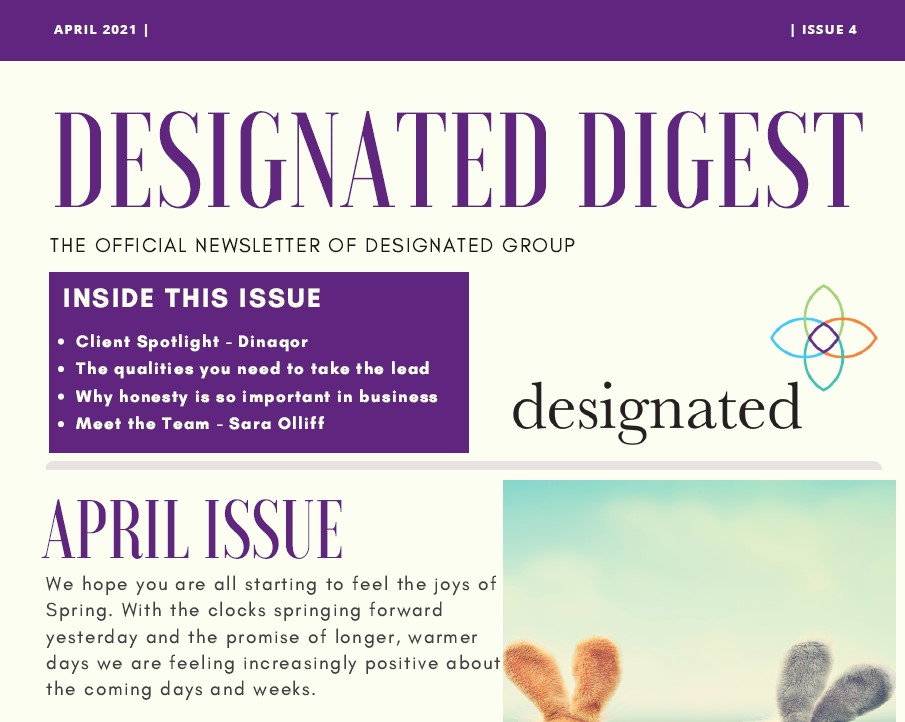
April Edition of Designated Digest

April Edition of Designated Digest

We hope you are all starting to feel the joys of Spring. With the clocks springing forward yesterday and the promise of longer, warmer days we are feeling increasingly positive about the coming days and weeks. In this month’s edition the client spotlight is on Dinaqor, we also look at why honesty is so important in business and much more….

Download full newsletter

LinkedIn for Beginners – grow your skills today!

LinkedIn for Beginners – grow your skills today!

Pre-covid, our lives were busier than ever before, and although we knew that having an active professional network was good for us, it was difficult to make time during busy schedules. If you’re keen to make use of this extra time, this blog is for you…

LinkedIn is the world’s largest professional network with 720+ million users across 200 countries. LinkedIn can help you to build credibility, maintain your online reputation, create a meaningful network of referrals and highlight your expertise on this social media platform.

What are the different page types?

There are three different LinkedIn page types; personal profile, company page and showcase page. A personal profile is a central place for your own personal brand. It’s a great place to explain who you are, what you stand for and give a history of your professional experiences and achievements. A company page lets a practice promote its services, recruit new talent and share important, interesting and useful updates. A showcase page is an extension of your company page, designed to highlight a brand, proposition, or initiative.

Why have a LinkedIn profile?

Your LinkedIn profile is where first impressions are formed and is a chance to showcase your skills and experience amongst your peers. You should also consider adding buttons to your LinkedIn profile from your email signatures, your website and your practice website to drive traffic to your social channels. This can also provide valuable social proof for your business.

So, it’s time to spruce up your profile. Here are our three top tips to get started.

  1. Update your URL

Make yourself visible and easy to remember by personalising your URL. It’s easy to do.

Go to your profile page –

● On the right hand side, select Edit public profile & URL
● You can then update the URL on the right-hand side of the page. Consider taking out the numbers which LinkedIn automatically adds when you set up your profile.

2. Complete your profile fully.

Google loves a completed profile, fill it with keywords and you’ll be found when someone searches for your name or speciality. So to get a completed profile, you’ll need to have a look at your “Profile strength meter”. The Profile Strength meter gauges how robust and complete your profile is. Once the meter is full and all prompts are complete, you’ll receive an All-Star profile rating.

So how do you find out how complete your profile is?

● Click the Me icon at the top of your LinkedIn homepage
● Select View profile
● Below your top card information, move your cursor over the meter to see which steps you’ve completed
● Click the Dropdown icon in the upper right corner of the meter to discover more information about the next profile strength completion step
● Follow the prompts to complete any of the steps listed

3. Get involved!

Social media is social for a reason. By engaging with content on LinkedIn, your connections or followers see this action, which builds your reputation and keeps you at the top of their mind. Engaging is as simple as liking or sharing someone else’s post which resonates with you and building a conversation. You can share your view, your experience or perspective on the topic.

Creating updates (or posts) gives a chance to showcase your expertise and knowledge. Updates are generally shorter and it is important to put the company’s position or view on the content, so readers can fully understand the brand and the differentiation. You can create longer pieces of content called articles on LinkedIn. This can allow you to write in-depth about your expertise – challenges, opportunities, important trends in your specialism. They are typically longer than posts and are limited to 125,000 characters at the moment, plus you can include images, external links and rich media.

March Edition of Designated Digest

March Edition of Designated Digest

We were all relieved to hear the Prime Minister speak positively, with some caution, on 22nd February regarding the road map that returns us all to ‘normal’ life. In this edition our client spotlight is on POD Talent, LinkedIn for beginners, the power of people and meet Michelle Wheeler, Designated’s Marketing Director.

Download full newsletter